Table of Contents
A Christmas Carol Figurative Language Worksheets Answers – The countdown to Christmas is filled with excited energy! Channel that festive buzz into something both playful and purposeful with the A Christmas Carol Figurative Language Worksheets Answers. From seasonal word puzzles and ornament-inspired coloring activities to jolly Santa correspondence templates, these pages are your go-to solution for screen-free pauses, long car rides, or keeping little hands busy while you wrap presents. Learning has never felt so much like holiday magic!
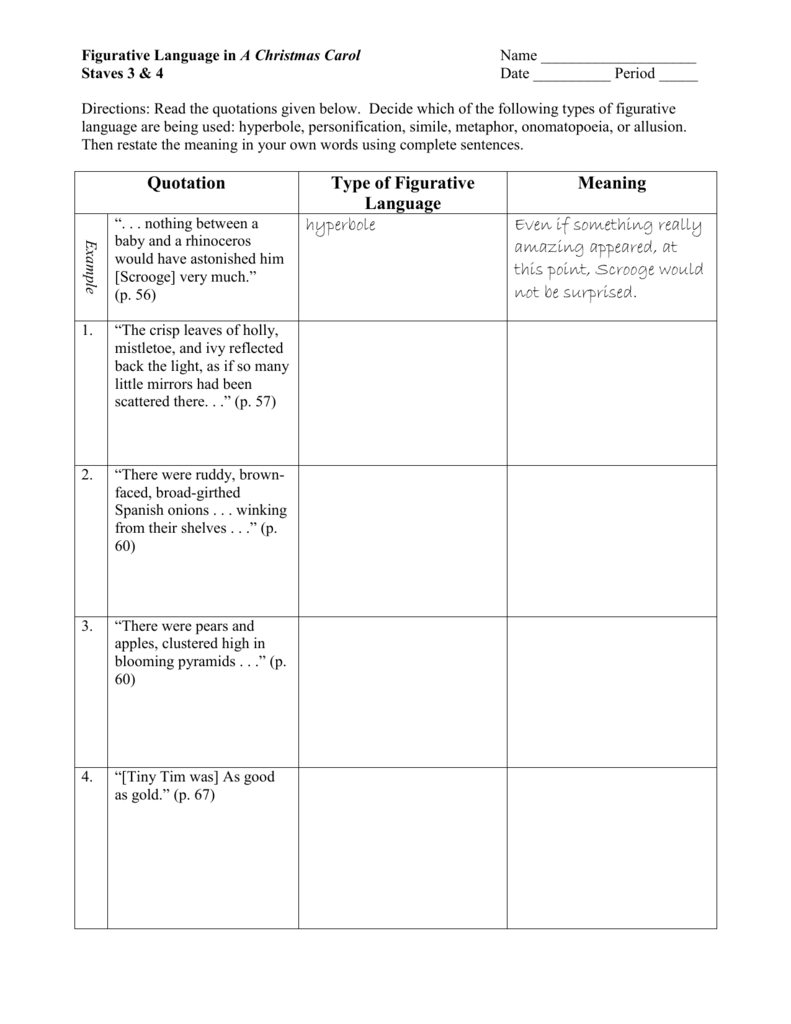
A Christmas Carol Figurative Language Worksheets Answers
Christmas is a time of joy, laughter, and giving. It’s a time when families come together to celebrate the holiday season and create lasting memories. One classic tale that embodies the spirit of Christmas is A Christmas Carol by Charles Dickens. This heartwarming story follows the transformation of Ebenezer Scrooge, a bitter old man, as he learns the true meaning of Christmas through visits from the ghosts of Christmas Past, Present, and Yet to Come.
One way to engage students with this timeless story is through figurative language worksheets. These worksheets help students understand and appreciate the rich language used by Dickens to bring his characters and settings to life. By analyzing similes, metaphors, personification, and other literary devices, students can deepen their comprehension of the text and develop their critical thinking skills.
Unlocking the Power of Figurative Language
Figurative language adds depth and emotion to writing, making it more engaging and vivid for readers. In A Christmas Carol, Dickens uses figurative language to paint a picture of Scrooge’s transformation and the festive atmosphere of Christmas. By completing worksheets that focus on identifying and interpreting these literary devices, students can gain a deeper understanding of the text and appreciate the artistry of Dickens’ writing.
One example of figurative language in A Christmas Carol is the use of similes to compare characters and situations. For instance, Scrooge is described as hard and sharp as flint at the beginning of the story, emphasizing his cold and unfeeling nature. As students analyze this simile and others like it, they can explore how Dickens uses language to convey deeper meanings and evoke specific emotions in the reader.
Another key aspect of figurative language in the story is the use of personification to bring inanimate objects to life. For example, the ghost of Jacob Marley is described as having a chain heaped with cash-boxes, keys, padlocks, ledgers, deeds, and heavy purses wrought in steel. This vivid imagery helps students visualize the ghost’s burden and understand the consequences of a life consumed by greed. By engaging with such examples of personification, students can appreciate the power of language to create memorable and impactful descriptions.
Enhancing Comprehension and Critical Thinking
In addition to deepening students’ understanding of the text, figurative language worksheets also help develop their critical thinking skills. By analyzing how literary devices are used in A Christmas Carol, students can practice making connections, drawing inferences, and interpreting the author’s intentions. This process encourages students to think beyond the literal meaning of the text and consider the underlying themes and messages that Dickens conveys through his writing.
Furthermore, working with figurative language worksheets can enhance students’ writing skills by inspiring them to incorporate literary devices into their own compositions. By studying how Dickens uses metaphors, imagery, and other devices to create powerful descriptions and evoke emotions, students can learn to apply similar techniques in their own writing. This hands-on approach not only reinforces their understanding of figurative language but also empowers them to become more effective and expressive writers.
In conclusion, figurative language worksheets offer a valuable opportunity for students to engage with and appreciate the literary merits of A Christmas Carol. By exploring the rich language and imagery used by Charles Dickens, students can deepen their comprehension of the text, enhance their critical thinking skills, and improve their own writing abilities. Through these engaging activities, students can truly immerse themselves in the timeless tale of Scrooge’s redemption and the true spirit of Christmas.
Related of Christmas Worksheets Printable
Copyright Disclaimer: Images showcased on this site are acquired from online sources and are protected by their respective copyrights. We make no claims of ownership or copyright over these images. If you hold the copyright to any of the images used and wish to have them credited or removed, please contact us.